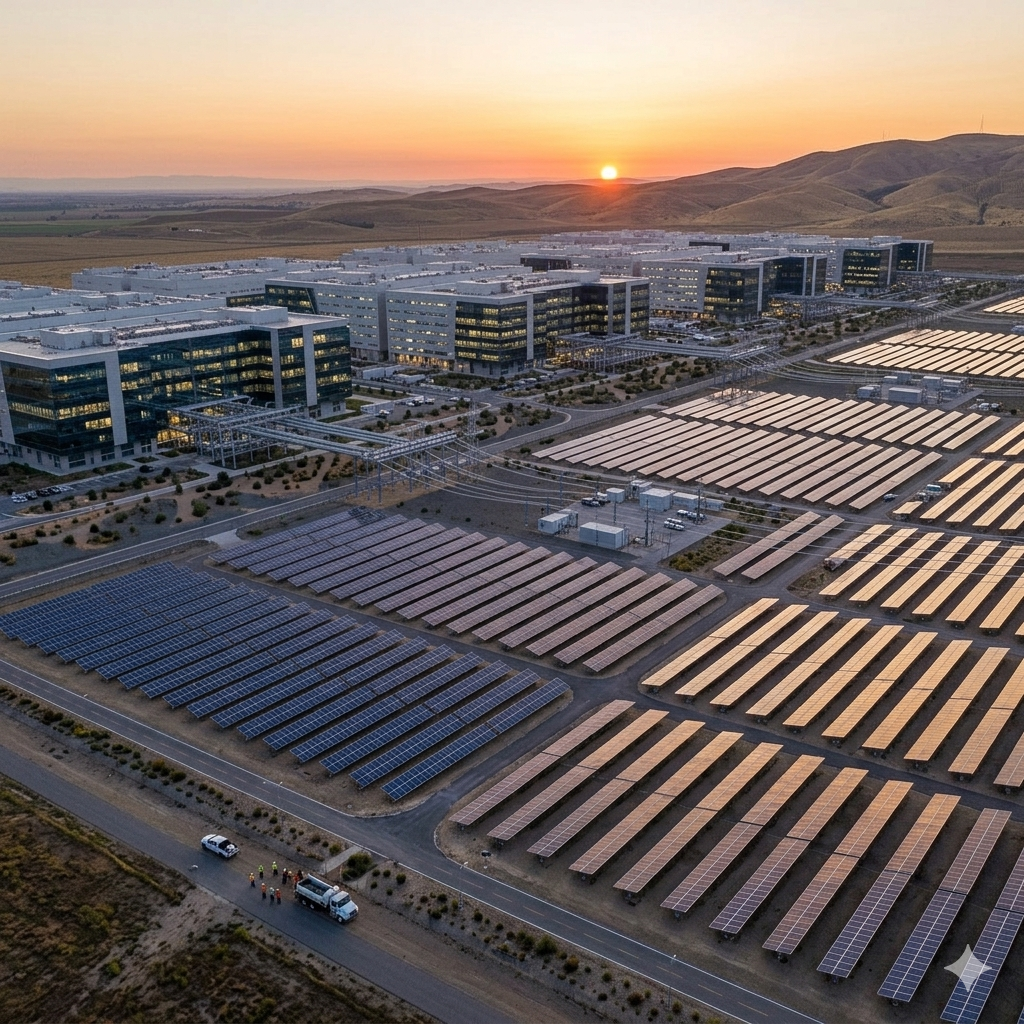
Our solutions
[ Clean, affordable, rapid ]Clean, affordable power when demand is highestSolar + battery power for peak demand times
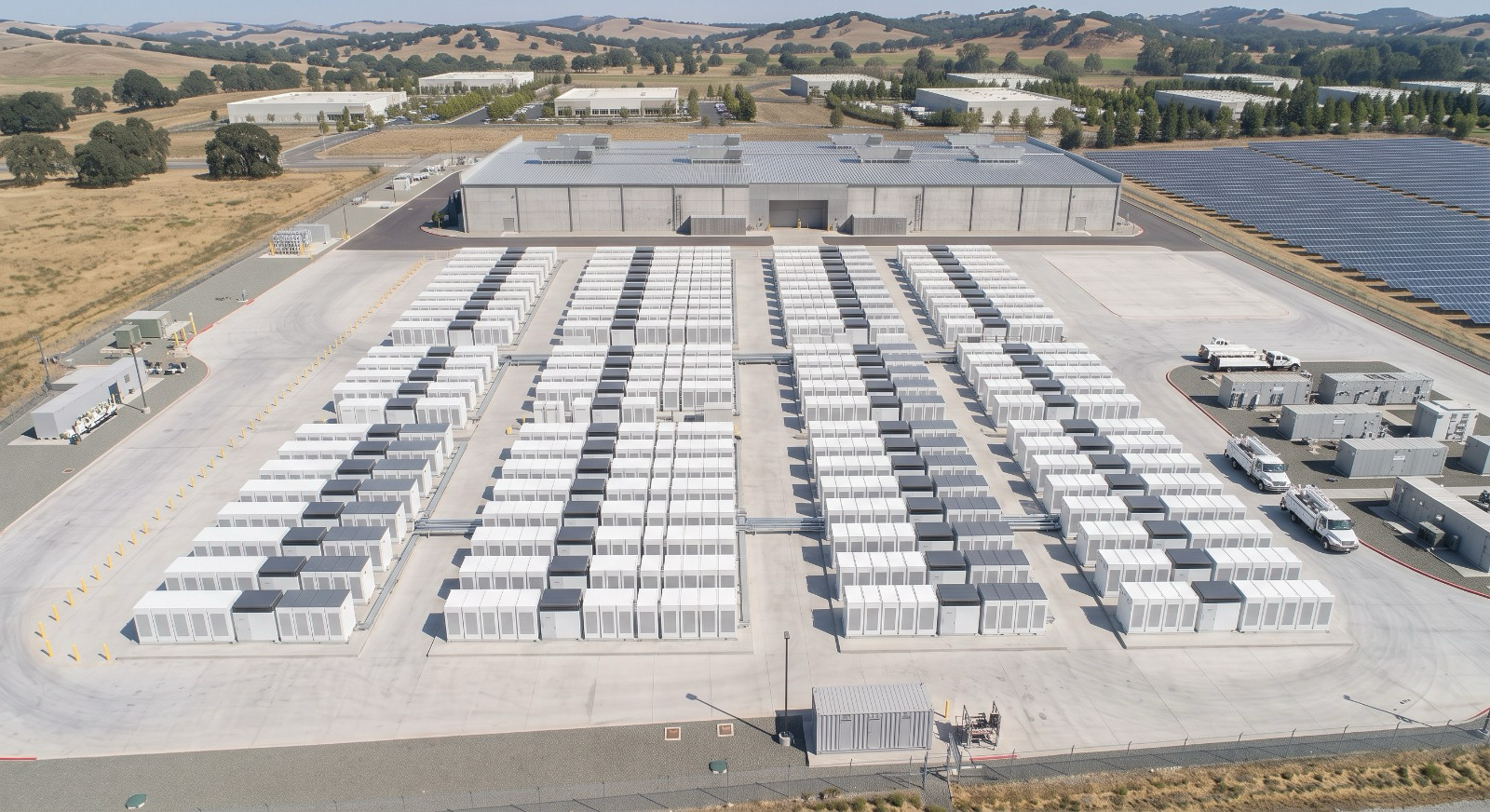
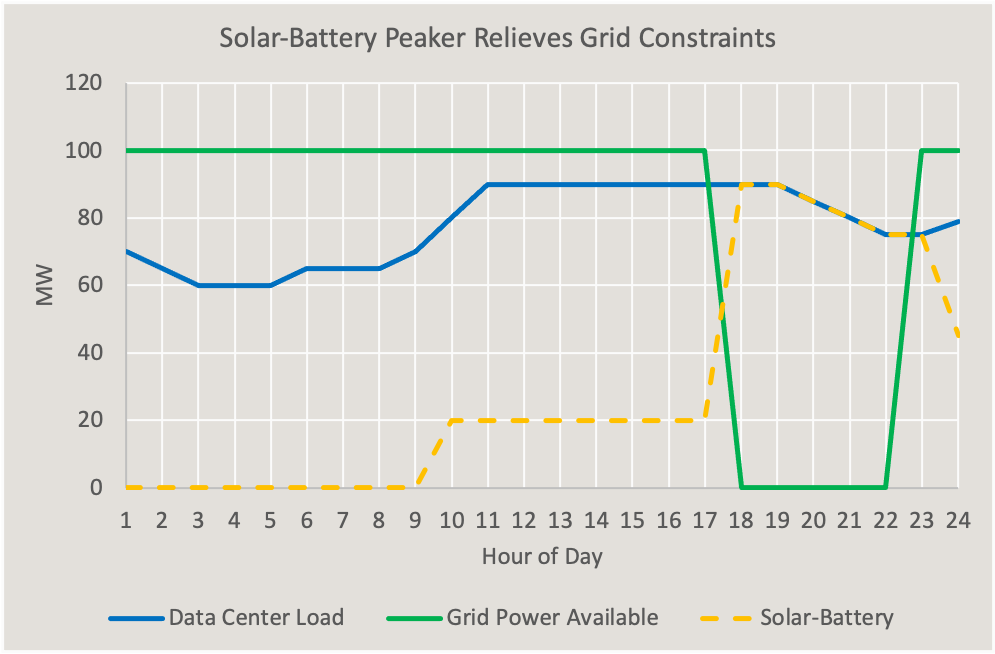
Faster power, with zero emissions. Our on-site solar with battery storage systems allow data centers to cut their grid power demand during 4 to 8-hour periods of peak grid strain.
Details
12 – 24 months compared to 5 – 12 year waits for standard grid connection.
Time-to-power
Carbon savings
90% clean power.
Allow data centers to self-provide power during hours of grid strain. This means electric utilities can offer power to data centers immediately without waiting for grid upgrades or burdening existing rate-payers with cost increases to pay for new infrastructure. This reduces time-to-power from 5+ years down to 12 – 24 months.
Designed to
20 – 50% compared to gas power or major high-voltage grid upgrades.
Cost savings
guard against uncertaintyGas backup to clean grid power
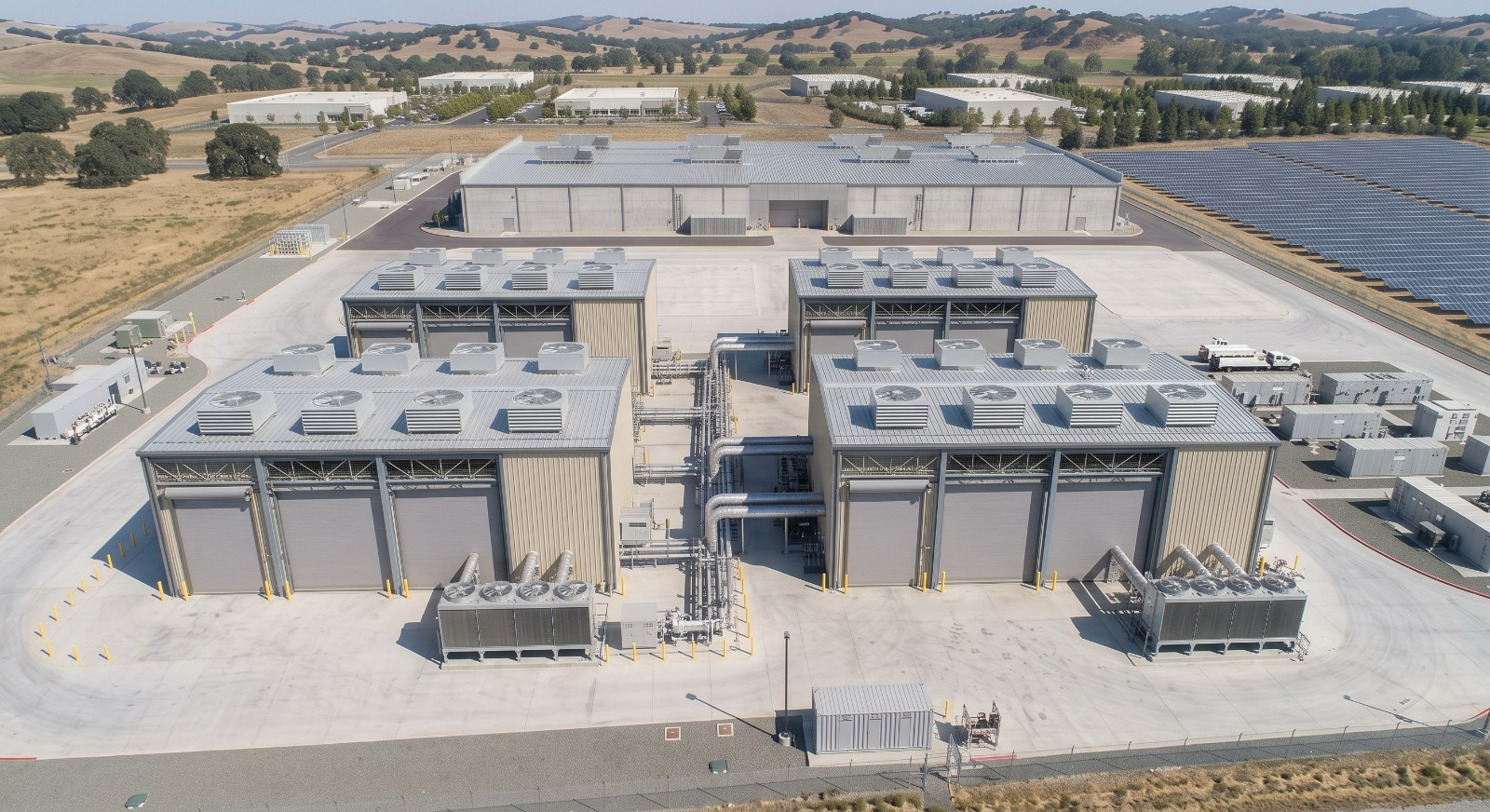
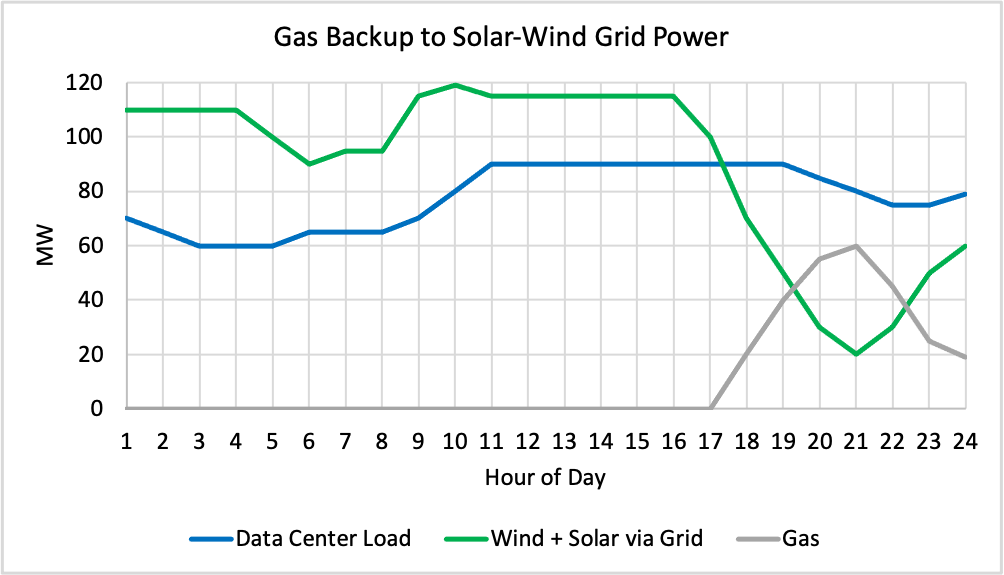
For facilities that need reliable electricity amidst unpredictable grid constraints, our gas generators serve as an on-site backup to renewable energy provided by the grid. Similar to our solar and battery systems, this enables an immediate bridge to the grid while giving grid operators the ultimate in flexibility to integrate renewables and new load.
Details
Clients who are connected to clean grids that face unpredictable peaks in energy demand or sudden drops in power availability. When the grid can’t deliver power, our natural gas generators come online, relieving the grid and providing the client with reliable power.
Designed for
12 – 18 months compared to 5 – 12 year waits for firm grid power.
Time-to-power
Rough parity with grid in most locations.
Cost savings
90% carbon free energy when connected to electric grids with high renewables.
Carbon savings
DISPATCHABLE CLEAN powerNatural gas with carbon capture
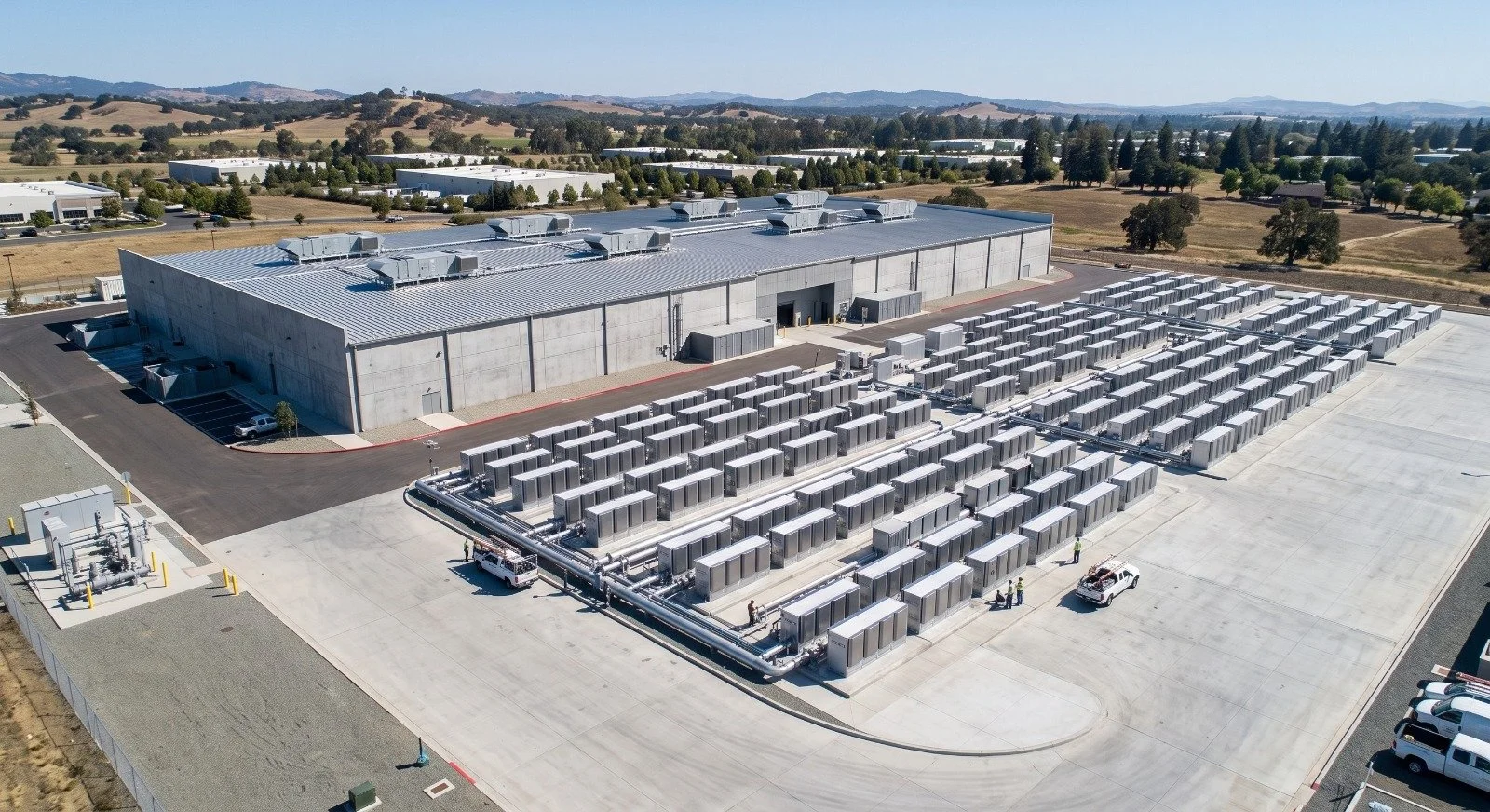
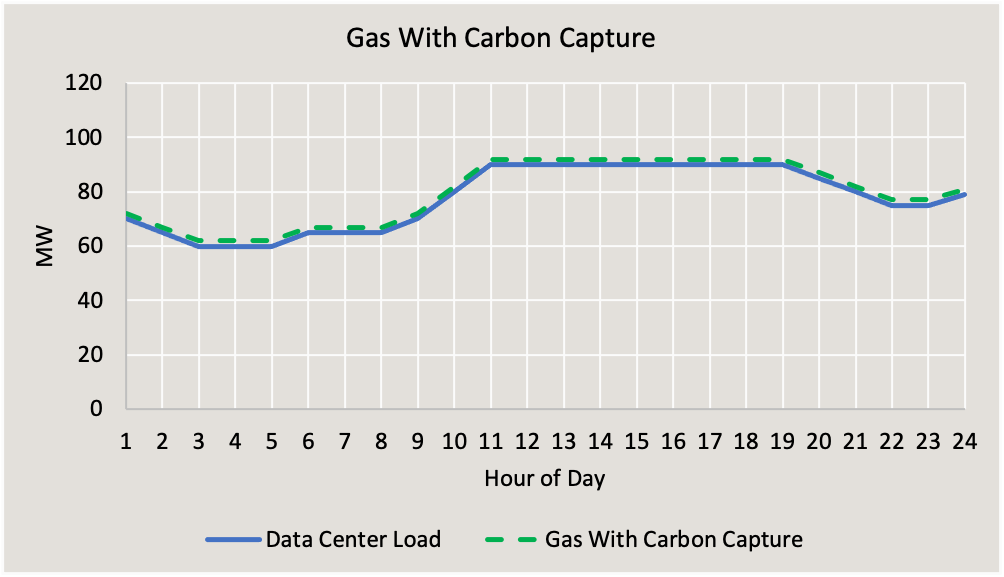
Our natural gas with carbon capture systems provide fully dispatchable, clean power when sited with a carbon sequestration well. These systems can operate connected to the grid or completely independent of it.
Details
Time-to-power
12-24 months
Fully dispatchable clean power in locations where cabon capture wells are viable.
Designed for
Rough parity with grid in most locations.
Cost savings
90% carbon free energy.
Carbon savings
data center to grid integrationMedium-Voltage UPS as a Service (UPSaaS)
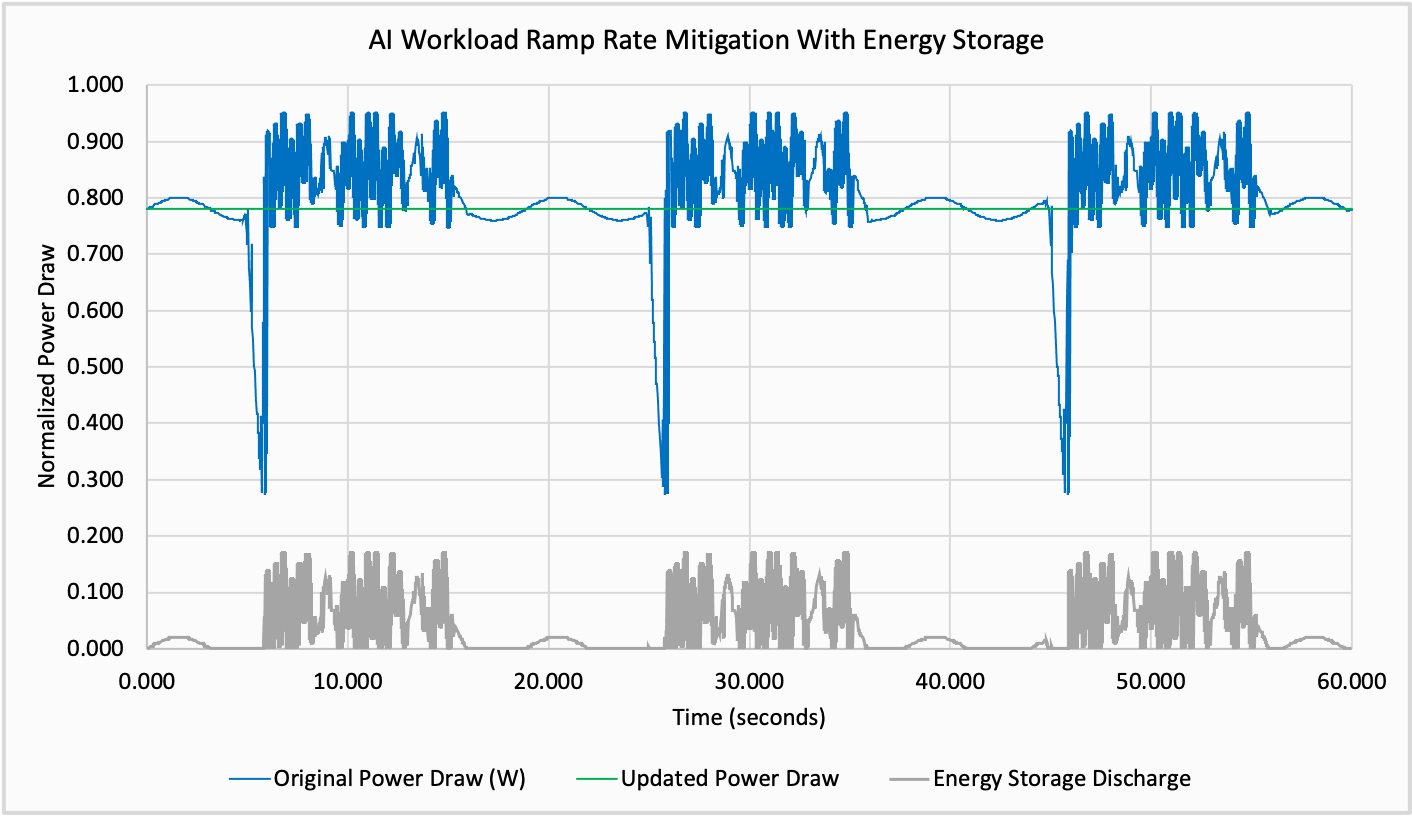
Data center power demands can swing wildly in a matter of seconds, as shown at the chart to the left. This volatility can wreak havoc on the grid and threaten the electricity reliability that we all depend on. To protect against this, CleanAI specifies the performance of battery energy storage systems (BESS) from the world's leading OEMs and finances complete, certified Medium-Voltage UPS solutions that provide a crucial safety layer for data centers and grid or microgrid integration.
Details
Data centers that have either high power ramp rates that can threaten grid reliability or strict grid voltage and frequency ride-through requirements.
Designed for
12 – 18 months.
Time-to-power